
AI Overview
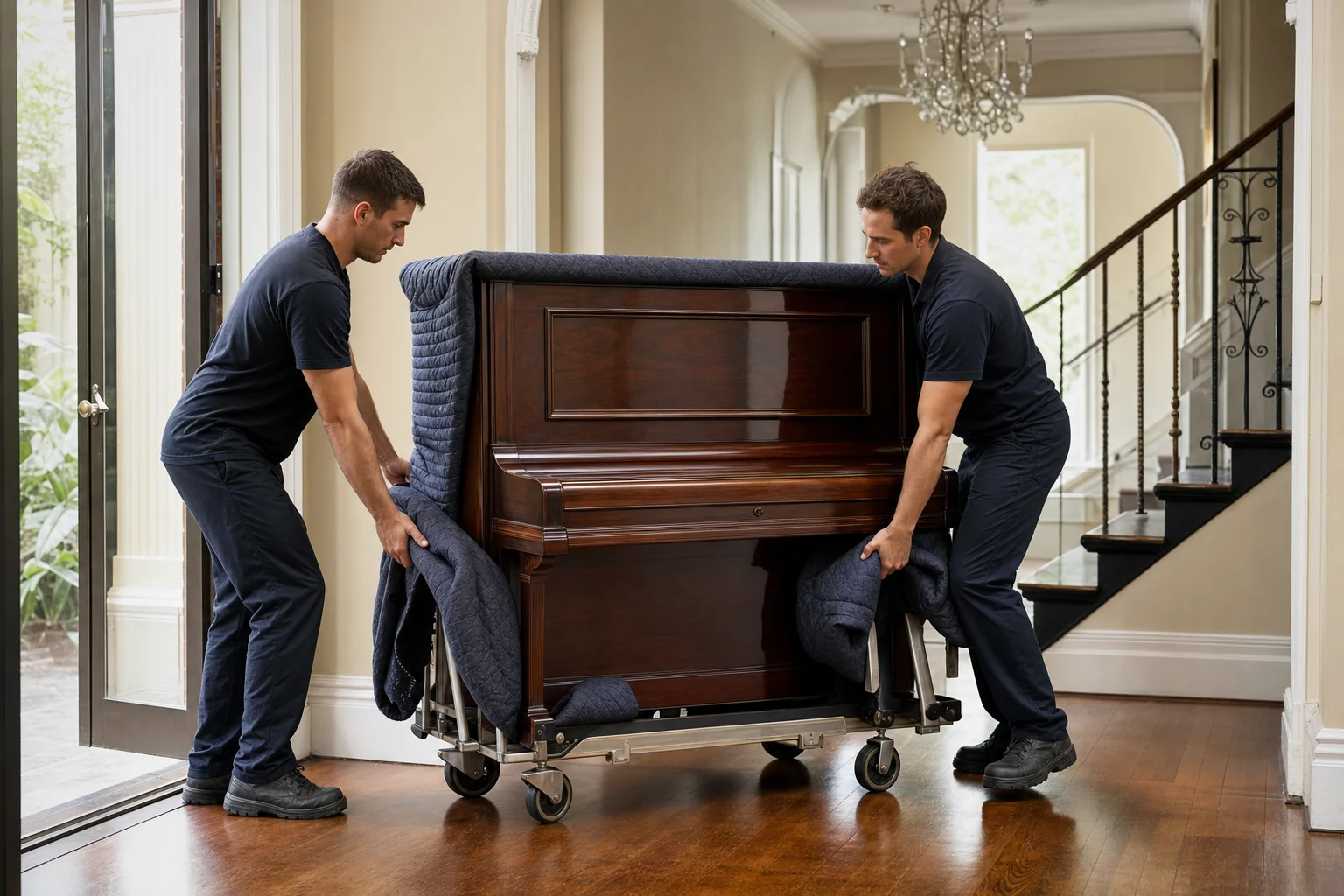
Moving a piano safely is a specialist job, not a strong-friends job. Their weight is unevenly distributed and the cast-iron frame, casters and finish are all easily damaged. Proper trolleys, padding and trained crews are what protect both the instrument and the people moving it.
Key highlights
- Pianos are heavy and top-loaded, which makes them genuinely dangerous to tip
- Uprights and grands need very different handling techniques
- Specialist trolleys, skids and padding protect the frame and finish
- Stairs and tight doorways are the highest-risk part of any piano move
- Never drag a piano on its casters, they are for positioning only
- Let the instrument settle and retune a couple of weeks after moving
A piano is one of the few household items that genuinely warrants a specialist. It is heavy, the weight sits high and unevenly, and the casters are not built for moving across a room, let alone down stairs.
Get it wrong and you risk a serious injury, a damaged floor, or thousands of dollars of harm to the instrument. Get it right and it is calm and controlled.
Here is how the professionals do it, and what to look for when you book.
Why a piano is a specialist job
An upright piano commonly weighs between 200 and 350 kilograms. A grand can be heavier again, with the added complication that the legs and lyre have to come off for transport.
200-350kg
typical upright piano weight
3+
trained movers for most piano jobs
1
wrong tilt that can crack a frame
The casters are not wheels
Piano casters are designed for small positioning nudges on a hard floor, not for rolling the instrument any real distance. Dragging a piano on them can snap a caster, gouge the floor or topple the piano.
The equipment that protects it
The right gear is what separates a safe piano move from a gamble. None of it is improvised.
- A heavy-duty piano trolley or skid board rated to the weight
- Thick moving blankets and padding to protect the finish
- Straps and a four-wheel dolly for controlled movement
- A ramp and extra crew for any stairs or steps
- Floor protection at both the old and new home
Assess and protect
Measure doorways, plan the route and wrap the piano fully in padding.
Lift, do not drag
The crew lifts the piano onto a skid or trolley rather than rolling it on casters.
Control the stairs
Stairs are taken slowly with straps and enough hands to keep the load balanced.
Place and settle
The piano is positioned, unwrapped and left to acclimatise before tuning.
After the move
A piano is sensitive to changes in temperature and humidity, and the move itself jostles the strings and frame. It is normal for it to need attention afterwards.
Wait before you tune
Give the piano two to four weeks to settle into its new home before booking a tuner. Tuning it the same week often means tuning it again soon after.
A piano move looks slow and deliberate on purpose. The control is the whole point.
Planning a move? See how we handle Pianos, Antiques & Artwork across the Lower North Shore.
View serviceFrequently Asked Questions
It is strongly discouraged. The weight, the high centre of gravity and the risk of injury or damage make a piano a job for trained movers with the right trolleys and padding, not just muscle.
Yes. Grands require additional steps, including carefully removing the legs and lyre and transporting the body on a padded skid, but they are well within the scope of a specialist piano move.
Almost always. The movement and the change of environment affect the tuning, so plan to have it tuned a few weeks after the move once it has settled in.